Skip to content

Narrow screen resolution Wide screen resolution Auto adjust screen size Increase font size Decrease font size Default font size default color brick color green color
You are here:Home
American Toad - Bufo americanus PDF Print E-mail

By: This e-mail address is being protected from spam bots, you need JavaScript enabled to view it

Status

No status assigned in Iowa.

American Toad - Bufo americanus
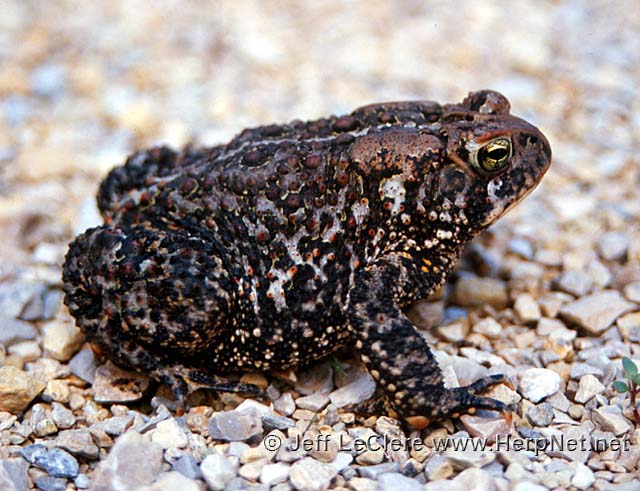
American Toad, Bufo americanus, from Polk County, Iowa
 

Description

This is one of Iowa's best known herp species. Adults are 2 to 3 1/2 inches snout to vent. The ground color is highly variable, but it is usually a shade of brown. Rarely it is gray, red, or greenish. There may be black spots on the back. These spots contain one or two warts. These black spots often have a white border. They have an oval partoid gland behind each eye. The belly is white or yellowish and is heavily mottled with black. There is usually a light mid dorsal stripe down the back. Males may have dark throats and female have white throats

American Toad - Bufo americanus
American Toad, Bufo americanus, from Butler County, Iowa
 

Subspecies

The subspecies found in Iowa is the eastern American toad, Bufo americanus americanus.

Range

The American toad is found statewide in Iowa. It is somewhat less abundant in western Iowa where it competes with two other toad species.

County Records for the American Toad in Iowa
 

Habitat

This toad is found everywhere in the state in every habitat. They are found in cities and towns, in parks and backyards. They only require semi permanent water for reproduction. Some wandering nonreproductive adults may be found in areas far from water.

Habits

These toads are diurnal for only a short period during spring and fall, but are mostly active at night in hot, humid weather. They may be seen catching insects under street or porch lights. I have, however, found them active (rarely) on hot days. To escape hot dry periods, they often burrow beneath the ground. Conversely, during rainy weather, they are very active above ground, especially at night when numbers of toads may be seen on the roads.

American Toad - Bufo americanus
American Toad, Bufo americanus, ventral, from Butler County, Iowa
 

They breed in the spring in April and May. The males produce a high pitched trill that may last 30 seconds. The sound is similar to a musical whistle. At the breeding ponds, males may attempt to breed with anything that comes near them, including other male toads, or other species of frogs. Male toads and frogs make a release call when they are amplexed by other anurans. The female releases 20,000 eggs in a string that are fertilized externally by the male as they emerge. These hatch into little black tadpoles with gold speckles. They morph into toadlets in July when hundreds of little, tiny toads may be seen hopping around the shore.

Newly metamorphed toadlets are dark brown or black, sometimes with little red spots. Adults and young burrow into the


ground to avoid freezing temperatures in the winter. Toads have many defenses against predation, but causing warts is not one of them! Toads do not cause warts. But they do produce a toxin in the partoid glands behind the eyes, It is only harmful if it is ingested or rubbed into the eyes. This toxin can make animals very sick. Some animals, such as garter snakes (Thamnophis sp.), are not harmed by this poison, so instead the toad puffs itself up with air to look bigger and to prevent the snake from swallowing it. It also urinates, but this really doesn't do any harm, it just makes the toad unappetizing to the predator.

Food

Toads eat anything small that they can fit into their mouths, which are mostly insects and various other invertebrates. Toads actually snap food up with their tongues instead of pouncing on their prey with their mouths open like many types of frogs do. Toads may use their hands and forearms to push large food items into their mouths. They are very valuable as controllers of insect pests.

 American toad calling
 
< Prev

Bookmark Us


Google
- - - - - - -

Who's Online

We have 17 guests online